
Thermal Services
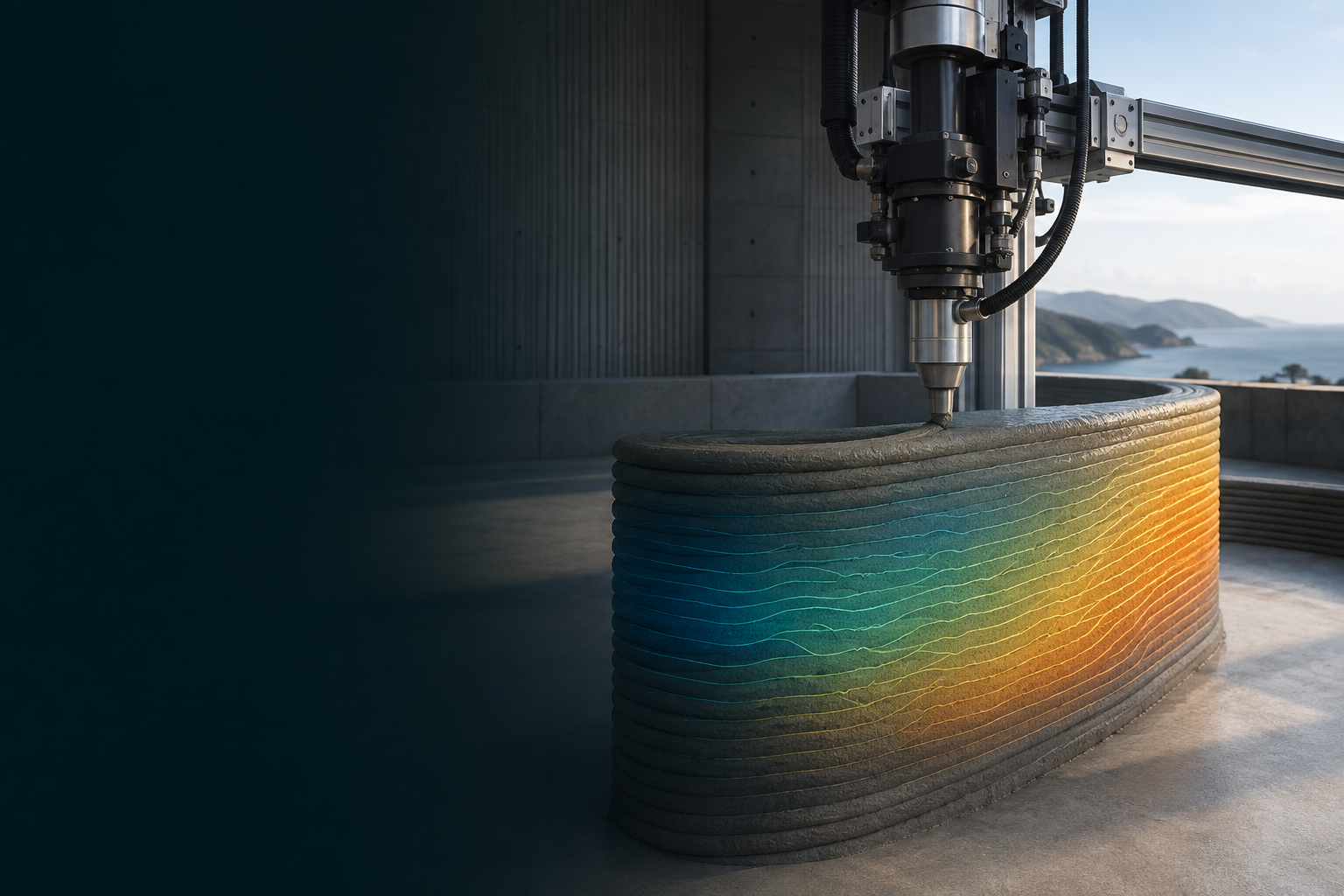
Practical guidance and collaboration around thermal testing, heat-transfer analysis, experimental validation and performance interpretation for materials, prototypes and building systems. Project scope depends on the available evidence, equipment and technical requirements.
Thermal Conductivity and Measurement
Understand steady-state testing, specimen effects, uncertainty and the interpretation of thermal-conductivity data for conventional and additively manufactured materials.
Building-Envelope Energy Performance
Explore insulation, thermal bridging, thermal mass, moisture and the relationship between material properties and whole-building energy demand.
New Zealand Climate and Compliance
Connect research findings with New Zealand climate zones, Building Code H1 pathways and the need for warmer, drier and more efficient buildings.
Modelling and Digital Methods
Use THERM, EnergyPlus, computational fluid dynamics and finite-element analysis to translate laboratory measurements into component- and building-scale performance.
Topics in Development
- Heat flow through 3D-printed concrete wall systems
- Thermal anisotropy and interlayer effects
- Low-carbon printable materials and energy trade-offs
- Finite-element modelling and experimental validation
- Data-centre cooling and high-performance thermal systems